Google Ads For Contractors

Google Ads for Contractors — Turn Budget Into Booked Jobs

Most contractors have tried Google Ads and got burned—wrong keywords, junk leads, money gone. We build campaigns that target your exact services in your exact area, so every dollar goes toward calls from customers who are ready to hire.

Built For Your Services
Your Area, Your Customers
Grow When You're Ready
Transparent Reporting
1

We Build It Right From Day One

Custom campaigns built around your highest-value services and the areas where you actually want to work. No templates, no guessing.

2

Your Phone Starts Ringing

Your ads go live and real customers in your area start calling. We track every lead so you know exactly what you're paying per call and per job.

3

Scale What's Working

Once we know your cost per lead and your close rate, we dial up what's working. More budget in, more jobs out — with the numbers to prove it.

Is This For You?

Google Ads is for businesses with a solid foundation and the budget to invest in paid advertising. This isn't where you start—it's where you scale.

Get Your Market Report

Professional Website

You already have a professional website that converts visitors into leads.

Budget Ready

You have at least $3,500/month to invest in advertising (ad spend plus management).

Know Your Numbers

Your business model can support the cost of paid leads—you know what a customer is worth.

Ready to Scale

You want to grow faster than organic marketing alone allows.

How Google Ads Actually Works

Before a contractor writes the first check, it's worth understanding the engine they're buying into. Google Ads — formerly Google AdWords — runs on a bidding system. Contractors bid on keywords, and every click on an ad costs money. That's where the term Pay-Per-Click (PPC) comes from.

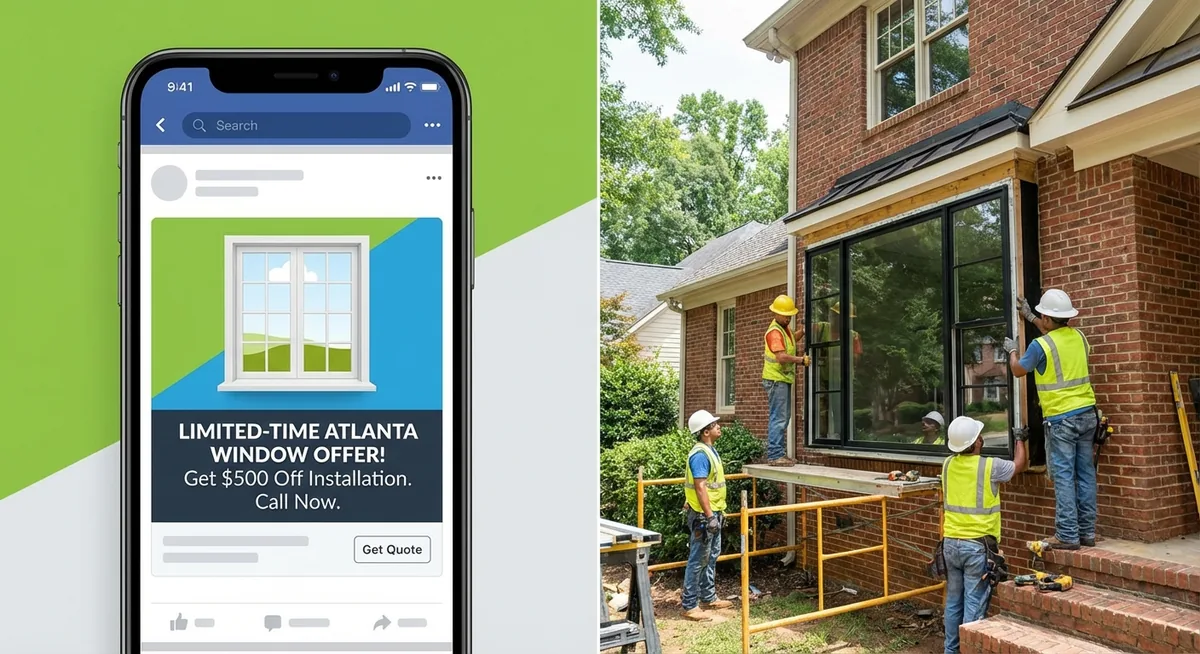
Google Ads for contractors — how pay-per-click bidding works in the contractor marketing space

The Auction

A homeowner types "kitchen remodel" into Google. Every contractor bidding on that keyword enters a live auction. Google ranks the bidders by bid amount and Quality Score — a hidden metric based on click-through rate, landing page quality, and ad relevance. The winner pays only a penny more than the next-highest bid.

Cost Per Click Ranges Wildly

CPC ranges from a few dollars in rural markets to over $180 per click in premium trades and urban markets. Chuck Kile once paid $180 per click running Google Ads for a painting contractor in Portland, Oregon. The same keyword in a smaller market might have cost one-tenth that. Market density and bidder willingness decide the rate.

Bids Rise Until Profit Runs Out

In a competitive auction, bids keep climbing as contractors compete for the top spot. They rise until the math stops working — until the next dollar of CPC makes the job unprofitable. Then bids level off near that equilibrium. That's why Google Ads CPCs have crept up in nearly every major home-service trade over the past five years.

Why Contractors Feel Priced Out

Many contractors have tried Google Ads, burned through a budget, and walked away frustrated. There's a structural reason, and it isn't the contractor's fault.

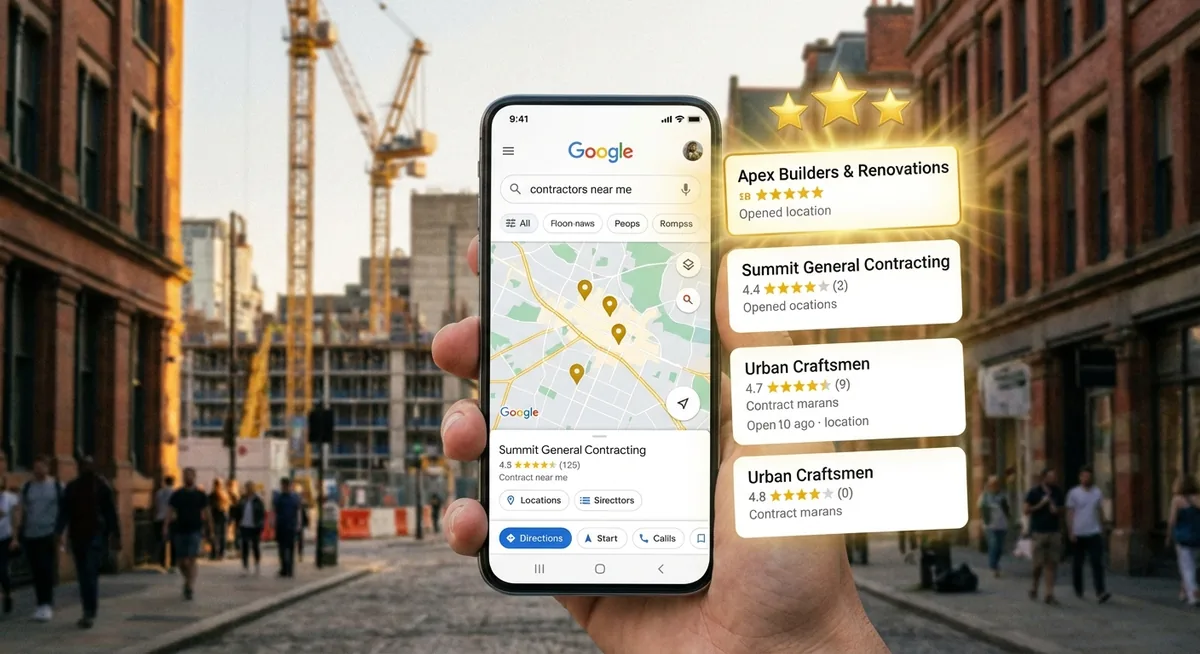
Lead reseller platforms and their effect on Google Ads cost per click for contractors

Lead Resellers Dominate the Auction

Angi, HomeAdvisor, Thumbtack, Porch, Yelp, Bark, and similar platforms are the largest buyers of home-services clicks on Google. They advertise in every city, town, and suburb in the country — and they have the deepest pockets in the auction.

Their Unit Economics Beat Yours

A lead reseller buys one click, captures the homeowner's info, and sells that lead to 3-5 different contractors. Their cost per acquired lead is divided across multiple buyers. A single contractor bidding in the same auction is paying the full cost for just themselves. That's why resellers can consistently outbid local contractors on the same keywords.

The Irony

Many of the same contractors who advertise on Google Ads also buy leads from Angi and similar resellers — paying the very platforms that are inflating their CPCs. That's why Adapt consistently pushes clients toward Google Maps and organic channels: they're the few places where national lead resellers can't outspend a well-run local business.

The Spam and Bot Problem

Google Ads also attracts heavy bot, scraper, and solicitor traffic — any of which can click on an ad and drain the contractor's budget without ever being a real customer. Negative keyword lists help, and so do IP exclusions and audience targeting, but it takes skill and ongoing management to keep non-customer clicks from eating into the ad spend. This is one of the reasons most contractors shouldn't manage their own Google Ads accounts.

Why Most Google Ads Fail for Contractors

Beyond the lead-reseller problem, most contractor Google Ads failures come from avoidable mistakes. Adapt has audited accounts where contractors burned through five-figure budgets on these issues alone.

Running Ads to a Bad Website

Buying clicks to a website that doesn't convert is burning money. If the landing page loads slowly, doesn't have a clear call-to-action, or doesn't build trust, every click is wasted. Adapt audits the website and conversion flow before recommending any paid ad spend.

Paying for Clicks From the Wrong Places

Adapt has audited contractor accounts buying clicks from India, Eastern Europe, and unrelated U.S. cities — for businesses that only serve a 20-mile radius. Default Google Ads settings favor reach over precision. Tight geo-targeting is essential from day one.

Broad Keywords That Attract Non-Customers

Someone types "remodeling" into Google. That single search could be a homeowner ready to hire — or a DIY enthusiast, a student looking at certification programs, a job seeker researching salary, or a competitor checking ads. Broad-match bids pay for every one of those. Adapt builds negative keyword lists around "how to," "jobs," "training," "salary," "certification," and dozens of other intent filters before any campaign goes live.

Budget Too Low to Learn

Google Ads needs data to optimize. An account running $500 per month generates too few clicks to tell what's converting. The algorithm can't learn, the contractor can't analyze, and the account stays stuck at baseline cost-per-lead. Adapt's $2,500/month starting budget isn't arbitrary — it's the floor for generating enough signal to actually improve performance.

No Conversion Tracking

Contractors often run ads without tracking which ad groups, keywords, or geographies drive phone calls versus clicks that bounce. Without conversion tracking, there's no way to tell what's working — and the account gets optimized against the wrong metric. Adapt sets up phone-call tracking, form tracking, and revenue attribution before the first click.

Reality Check: Google Ads Is a Competition

If competitors in the market can afford $200 per lead and a contractor can only afford $100, they get priced out of the top positions. Adapt is honest about whether Google Ads makes sense in a given market before the contract starts — sometimes LSA and organic SEO are the better fit, and trying to force Google Ads ends in frustration.

How Adapt Runs Google Ads Differently

Every contractor account starts from scratch. No shared templates, no "starter campaigns," no Google-autopilot defaults. Here's the exact process.

Google Ads campaign setup and management workflow for contractors
1

Audit Before Spending

Adapt audits the contractor's website, Google Business Profile, and review profile before recommending a single dollar of ad spend. If the foundation isn't ready to convert traffic, ads get delayed or denied until it is. This conversation is hard to have, but it's the one that saves contractors the most money.

2

Tight Geographic Targeting

Campaigns are locked to the contractor's exact service area — ZIP codes, radius-around-business, and specific towns or neighborhoods. Bordering cities and unrelated geographies are excluded on day one. This stops the "clicks from India" problem before it starts.

3

Keyword Strategy Built Around Buying Intent

Adapt bids on keywords that signal ready-to-hire homeowners — service plus location phrases like "emergency plumber in [city]" or "kitchen remodeling contractor [city]." Generic terms get filtered through extensive negative keyword lists so ad spend doesn't leak on job seekers, DIYers, training searches, and unrelated queries.

4

Conversion Tracking From Day One

Every call, form fill, and click-to-call event is tracked and attributed back to the specific keyword and ad that generated it. This turns "we spent money on ads" into "we spent $X and got Y leads at $Z cost per lead, and those leads closed at W percent."

5

Ongoing Monitoring and Optimization

No "set it and forget it." Adapt reviews search term reports, adjusts negative keywords, pauses underperformers, shifts budget toward what's working, and tests new ad copy on a rolling basis. The account gets sharper every month — not drift-ier.

6

Scale What's Actually Profitable

Once the math is clear — cost per lead, close rate, cost per job, revenue per job — scaling becomes a decision, not a gamble. More spend goes into the ad groups that are closing work. Unprofitable campaigns get paused instead of propped up. The contractor controls growth with data instead of hope.

When Google Ads Actually Makes Sense

Google Ads isn't Adapt's default recommendation for most contractors. LSA and organic Google Maps usually deliver cheaper leads with less risk. But there are specific situations where Google Ads is the right move — and in those cases, nothing else compares.

Google search results with ads at the top — when paid Google Ads outperform LSA and organic for contractors

Hyper-Local Neighborhood Targeting

Launching in a new neighborhood or city? Google Ads can put a contractor's name in front of every homeowner searching service keywords in that specific ZIP code — something organic SEO takes months to do. For targeted expansion into a new service area, Google Ads is faster than every alternative.

Defending the Brand Name

Competitors regularly bid on their rival's brand name to steal traffic from people already searching for that company by name. A defensive Google Ads campaign bidding on the contractor's own brand keeps that traffic from leaking to competitors — usually at very low cost per click because Quality Score is high when the ad perfectly matches the search.

High-Margin Niche Services

Premium services with large job values — commercial remodels, high-end kitchen and bath, solar, pool construction, luxury additions — can absorb premium CPCs and still be profitable. If the average project is $50,000 and close rate is solid, even $200 per click can work. LSA caps out on these trades; Google Ads has the headroom.

Scaling Beyond LSA's Ceiling

Local Service Ads can only deliver what the local search market generates. Once a contractor has saturated LSA — bidding is maxed, market share is captured, and call volume has plateaued — Google Ads is the next layer. It reaches searchers LSA doesn't show for, and it extends the contractor's top-of-page footprint across more keywords.

Let's Talk About
Growing Your Business

Adapt is a small team that works closely with every client. Tell us what's going on with the current Google Ads account — or whether it even makes sense to start one — and we'll figure out the best next move.

  • Tell us about your goals or the problem you want to solve
  • Get an instant text & email confirmation so you know it's us
  • A team member will contact you quickly to learn more about how we can help
  • Free 30-minute strategy call to learn more about Adapt and ask any questions

Frequently Asked Questions

Adapt's starting Google Ads budget is $2,500 per month in ad spend, plus a management fee. Competitive trades and markets often require more. Below $2,500, there typically isn't enough click volume to generate meaningful data — the account can't learn what's working before the budget runs out.

Google Ads is a bidding system. Contractors bid on keywords (like "kitchen remodel" or "emergency plumber"), and Google charges per click — Pay-Per-Click or PPC. Cost per click can range from a few dollars to $180+ for premium keywords in competitive niches. Bids climb until they get too expensive to stay profitable, then level out near the market equilibrium.

Lead resellers — Angi, HomeAdvisor, Thumbtack, and similar platforms — are the largest buyers of home-services clicks on Google. They can afford to pay more because they resell each lead multiple times. Their bidding drives up cost per click for every local contractor competing in the same auction. Many contractors end up paying inflated CPCs and then also buying leads from those same resellers.

They can, but the foundation has to be solid first. Running ads to a poorly converting website is burning money. Adapt checks that the website, Google Business Profile, and review count are ready to convert before recommending any contractor spend on Google Ads.

Adapt recommends a three-step order: first, the foundation — website, Google Business Profile, and reviews. Second, Local Service Ads — pay-per-call, lower risk, leverages the review foundation. Third, Google Ads — once LSA volume plateaus and the contractor wants more leads. Google Ads is where contractors scale, not where they start.

Adapt uses Google Ads strategically, not as a default. Common use cases: targeting a specific neighborhood with a specific offer, bidding on the client's own brand name so competitors can't steal branded traffic, and running tight campaigns for niche high-margin services where unit economics support premium CPCs. For general lead generation, LSA and organic SEO usually outperform.

Spam clicks, bots, and solicitor traffic are a real problem on Google Ads today. Adapt uses negative keyword lists, IP exclusions, geographic tightening, audience exclusions, and conversion-tracking review to filter out non-customers. It's more work than it was five years ago, but it keeps cost per lead realistic.

Broad-match single-word keywords and job-seeking phrases drain budgets fast. Searches like "remodeling" alone pull in people researching DIY, students looking for certification courses, and job seekers — not homeowners ready to hire. Adapt builds negative keyword lists around "how to," "jobs," "training," "salary," "certification," and dozens of other intent filters before any campaign goes live.

They're different tools. LSA is pay-per-call, lower risk, uses Google Business Profile reviews, and caps upside at what the local market delivers. Google Ads is pay-per-click, higher complexity, higher ceiling, and requires a solid landing page. Most contractors should run Local Service Ads first and add Google Ads when they need more volume than LSA can provide.